
Image sourced from the author’s personal collection. 
Image sourced from the author’s personal collection. 
Image sourced from the author’s personal collection. 
Image sourced from the author’s personal collection. 
Image sourced from the author’s personal collection. 
Image sourced from the author’s personal collection. 
Image sourced from the author’s personal collection.
Cong doesn’t simply look peaceful — it moves peacefully. Water slips beneath stone bridges, woodland paths curl away from the streets, and centuries of monastic calm seem to set the village clock. After one short wander, I found myself falling into step: breathing more deeply, walking more slowly, and listening more closely.
A Village Shaped by Water and Time
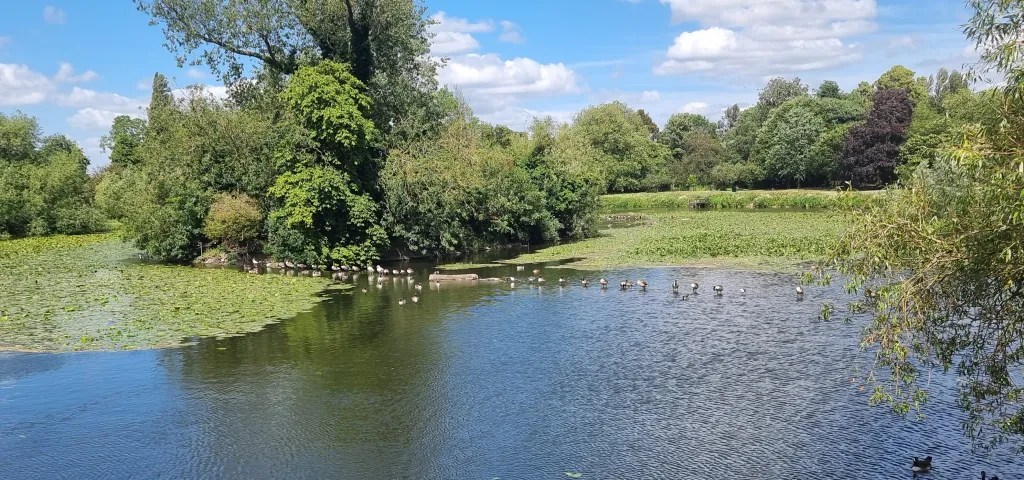
Cong balances on a slender strip of land between Lough Corrib and Lough Mask, while underground streams braid beneath the village like hidden threads. Water is the soundtrack here: slipping under stone bridges, whispering through reeds, and echoing softly in the woods. Its constant murmur makes the whole place feel unhurried, reflective, and quietly alive.
Cong’s story reaches back more than a thousand years, but it begins with a narrow crossing. Its Irish name, Cúnga Fheichín, means “the narrows of St Feichín”, after the saint who founded the first monastery here in the 7th century. The abbey that now dominates the village was established in 1137 under Turlough O’Connor, King of Connacht and High King of Ireland. It became a centre of learning and craftsmanship, producing the Cross of Cong, a 12th-century masterpiece now housed in the National Museum of Ireland.
The abbey’s long life was turbulent: raids and fires repeatedly disrupted it before its eventual dissolution in the 16th century. Yet its bones remain, softened by moss, framed by trees, and open to anyone who wants to wander through history at their own pace.
Walking Through Cong Abbey
Cong Abbey reveals itself in layers. First come the Romanesque doorways, carved with intricate patterns; then the remnants of the cloister, still suggestive of quiet scholarly life; and finally, the shell of the church, rising above the grass. Much of what survives dates from a 13th-century rebuild and was later stabilised in the 19th century by Sir Benjamin Lee Guinness.
What struck me most was how seamlessly the abbey blends into everyday village life. There is no barrier between past and present: you can stroll in freely, sit on a low wall and listen to the river running behind the cloister. Locals pass through on their way to work or while running errands, treating the ruins not as a monument but as a familiar companion.

The Monk’s Fishing House: Ingenious Peace
Follow the river path behind the abbey, and you reach one of Ireland’s most delightful historical curiosities: the Monk’s Fishing House. Built between the 15th and 16th centuries, this tiny stone structure sits directly over the River Cong, perched on an arch that lets water flow beneath it.
Inside, the monks had a wonderfully practical arrangement: a trapdoor for lowering nets straight into the river and a fireplace to keep warm while they waited. A rope even ran from the house to the abbey kitchen; one tug announced that dinner had arrived. Standing there in 2024, with sunlight flickering through the trees and the river murmuring beneath the stones, I could almost imagine the signal travelling up the rope. For a moment, the centuries collapsed into stillness.

Hollywood in the Quietest of Places
For such a tranquil village, Cong has a surprisingly cinematic past. John Ford filmed many of the most memorable scenes from The Quiet Man (1952) here, and the village wears that Hollywood connection with gentle pride. The Quiet Man Cottage Museum, signposts to filming locations, and stories handed down by locals keep the production’s legacy alive without overwhelming the place itself.
What surprised me was how naturally the film’s nostalgic charm fits the real Cong. Its slow pace, warmth, and sense of community are not cinematic inventions; they are the qualities I had already encountered beside the river, among the ruins, and along the woodland paths. The film did not create Cong’s character; it simply recognised it.

Why Cong Stayed With Me
My 2024 visit wasn’t about ticking off sights; it was about absorbing a place that invites you to slow down without asking. Cong is small, but it contains multitudes: ancient history, cinematic lore, woodland paths, the sky reflecting on the water, and a serenity that seems to rise from the landscape itself.
Cong lingers long after you leave, not because it dazzles with grand attractions, but because it makes quiet feel like an adventure of its own. Between two lakes and beside a restless river, the village continues in its own gentle rhythm. Spend a little time there, and you may find yourself carrying that rhythm home.

Leave a Reply